
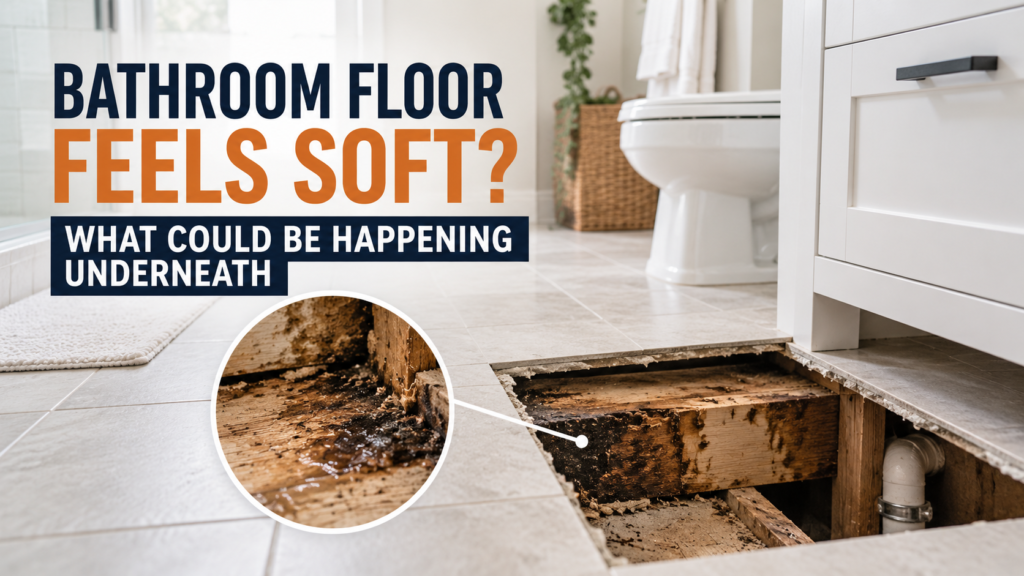
A bathroom floor should feel solid and stable every time you step on it. When part of the floor begins to feel soft, spongy, slightly sunken, or different from the surrounding area, it is usually worth paying attention.
Sometimes the cause is relatively minor. In other cases, that soft spot can be the first visible sign of moisture damage beneath the finished flooring.
The difficulty is that bathroom flooring can hide problems for a long time. Tile, vinyl, or another finished surface may still look acceptable while the subfloor underneath has already been exposed to moisture. Because bathrooms contain showers, tubs, toilets, sinks, plumbing connections, and drains, even a small leak can gradually affect materials below the surface.
For homeowners in Marietta, Georgia, understanding what a soft bathroom floor may indicate can help prevent a manageable problem from developing into a much larger renovation.
Why Does a Bathroom Floor Become Soft?
Most bathroom floors are built in layers.
The visible flooring is only the top surface. Beneath it is typically an underlayment or backer material and a structural subfloor attached to the floor joists. The exact construction varies depending on the age of the home, previous renovations, and the type of flooring installed.
When these materials remain dry and properly supported, the floor feels firm.
But repeated moisture exposure can weaken certain materials over time. Wood-based subflooring may swell, deteriorate, lose strength, or eventually begin to rot. Once that happens, the flooring above may start to flex under your weight.
A soft floor does not automatically mean severe structural damage, but it should not be treated as a normal cosmetic issue either.
Water Is Often the Main Suspect
Bathrooms are one of the areas of a home where hidden water problems are most likely to develop.
A leak does not need to be dramatic to cause damage. A few drops escaping regularly from a plumbing connection, shower enclosure, toilet seal, or bathtub can be enough to keep part of the floor damp.
Over months or years, that moisture can affect the subfloor without creating an obvious puddle.
The shower or bathtub may be involved
One common area to notice floor softness is directly beside a shower or tub.
Water may be escaping because of deteriorated caulk, problems around the shower door, plumbing connections, drain issues, or failure somewhere within the waterproofing system.
A homeowner may continue wiping up small amounts of water after every shower without realizing that some of the moisture is reaching areas beneath the finished flooring.
The visible water may be minor. The hidden exposure can be much more important.
A Toilet Leak Can Damage the Floor Without Being Obvious
Another area that deserves attention is around the toilet.
A toilet is connected to the drain system through a seal beneath the fixture. When that connection begins allowing moisture to escape, water can enter the flooring system where it is difficult to see.
The toilet itself may also begin to feel slightly unstable if the material underneath has deteriorated.
This is especially important because simply tightening a loose toilet does not solve a damaged subfloor. If the material beneath the fixture has lost structural strength, the source of the moisture and the damaged section both need to be evaluated.
The Problem May Start Under a Vanity
Bathroom vanities can also conceal slow leaks.
Supply lines, shutoff valves, drain connections, and sink plumbing are often hidden inside cabinetry. A small leak may remain unnoticed if water runs toward the back of the cabinet or down through an opening around the plumbing.
By the time moisture becomes visible on the bathroom floor, the material underneath may already have been exposed for some time.
Checking beneath the vanity occasionally can help homeowners identify water early, particularly if they notice staining, swelling, moisture, or a persistent damp smell.
What Is Happening to the Subfloor?
The subfloor is one of the most important hidden components of your bathroom.
It creates the structural surface that supports the flooring system and distributes loads across the joists below. When it is in good condition, tile and other finishes have a stable foundation.
When moisture repeatedly reaches the subfloor, the material may begin to deteriorate.
At first, the change can be subtle. The floor might flex slightly when stepped on. Later, the affected area may feel increasingly soft or uneven.
Ignoring that progression can allow the damaged area to grow.
In more advanced cases, a bathroom renovation may require removing the existing floor so the contractor can determine exactly how far the moisture traveled and whether materials below the subfloor were affected.
Could the Floor Joists Be Damaged?
The possibility of joist damage is one reason a soft bathroom floor should be investigated rather than simply covered with new flooring.
Floor joists are structural components beneath the subfloor. They are designed to support the weight of the floor and everything above it.
A localized moisture problem may affect only the subfloor. However, if water has been present for a long period or has repeatedly reached the same area, nearby framing can also require inspection.
That does not mean every soft floor requires major structural work.
It means the true condition cannot always be determined by looking at the surface.
Why Installing New Tile Over the Problem Is a Bad Idea
When a bathroom looks outdated, homeowners naturally focus on the finished materials they want to replace.
New tile, a modern vanity, updated fixtures, and a better shower can completely transform the room. But installing beautiful new finishes over deteriorated materials underneath can create problems later.
Tile requires a stable foundation. If the subfloor moves excessively, cracks or failures may eventually appear in the finished surface.
That is why a proper bathroom remodel should not only improve what the homeowner sees. It should also address the condition of the materials supporting the new installation.
When damaged subfloor is discovered during demolition, repairing or replacing the affected material before continuing the remodel can protect the new work.
Pay Attention to Changes Around the Soft Area
A soft floor is often accompanied by other clues.
You may notice discoloration near the baseboards, grout cracking, loose tile, a musty smell, swelling near cabinetry, or recurring moisture around the shower.
Even when none of those signs are present, a floor that suddenly feels different deserves investigation.
The most useful question is not simply, “How do I make this spot feel solid again?”
It is:
Why did the floor become soft in the first place?
Finding the source is what prevents the same damage from returning.
Repair or Bathroom Remodel?
The answer depends on what is discovered.
A small, clearly identified leak with limited damage may require a relatively contained repair. If moisture has affected a larger area, or if the bathroom already has aging waterproofing, outdated plumbing, damaged finishes, or other problems, remodeling may become the more practical solution.
Opening the floor during renovation also creates an opportunity to inspect areas that are normally hidden.
That is especially valuable in older bathrooms where previous leaks or repairs may not be visible from above.
Don’t Wait for a Soft Floor to Become a Bigger Problem
A soft spot in the bathroom floor is easy to postpone because the bathroom may still be usable. But moisture-related damage rarely becomes less expensive by waiting.
What begins as a localized problem can eventually involve more of the subfloor, nearby framing, flooring, cabinetry, or the shower area.
If your bathroom floor feels soft, spongy, or unstable, it is worth finding out what is happening underneath before moving forward with cosmetic repairs.
Just Services Remodeling provides professional bathroom remodeling services for homeowners who want more than a surface-level update. The goal is to identify problems discovered during renovation, address damaged materials properly, and rebuild the bathroom on a solid foundation.
Don’t lose time and allow what could be a straightforward repair to become an expensive and time-consuming construction project. Contact Just Services Remodeling to discuss your bathroom and determine the best next step for your home.