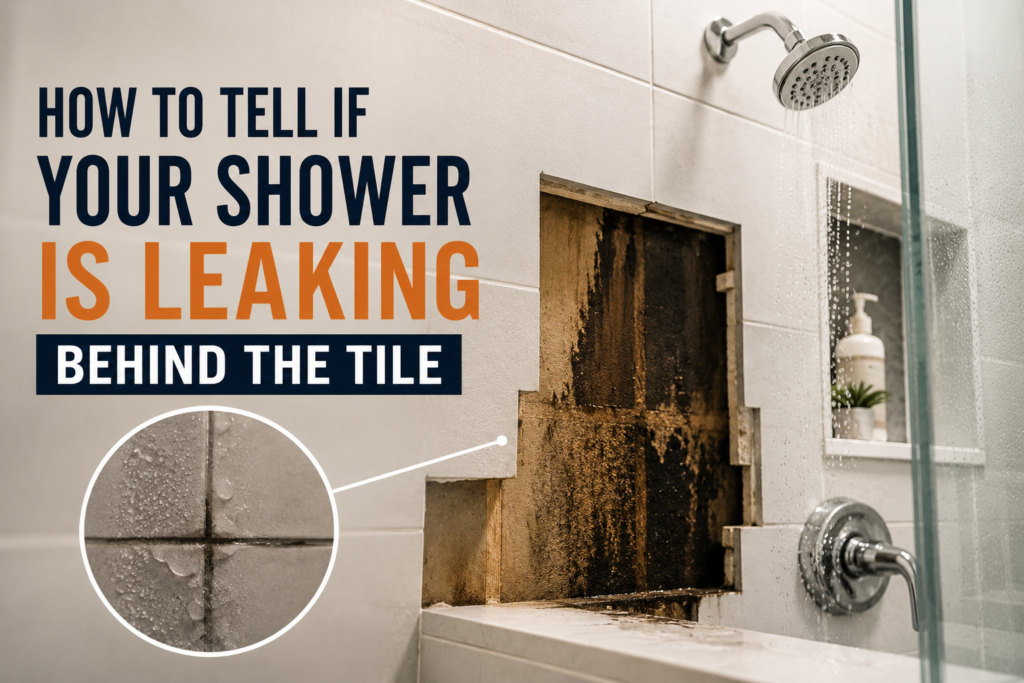
A shower can look perfectly fine on the surface while water is slowly causing damage behind the tile. There may be no puddle on the bathroom floor, no broken pipe in sight, and no obvious sign that something is wrong. Yet moisture can find its way through failed grout joints, deteriorated caulk, plumbing connections, or problems with the waterproofing system behind the finished surface.
For homeowners in Marietta, Georgia, recognizing the early signs of a hidden shower leak can make a major difference. A problem caught early may require a relatively contained repair. Left unnoticed, that same leak may eventually affect the wall structure, subfloor, surrounding finishes, or other parts of the bathroom.
The key is knowing what to look for before visible damage becomes impossible to ignore.
Why a Shower Can Leak Without Looking Damaged
Tile itself is only one part of a shower system. Behind the visible surface are multiple layers designed to manage moisture and protect the structure of the home.
Depending on the construction of the shower, these components may include:
- Tile and grout
- Cement board or another approved tile backer
- Waterproofing membrane
- Framing and wall studs
- Shower pan or waterproof shower base
- Plumbing supply lines
- Drain connections
- Subfloor beneath the shower
A properly constructed shower is designed so that the materials behind the tile remain protected from damaging moisture.
Problems begin when one part of that system fails.
Water may enter through a cracked joint, damaged plumbing connection, improperly sealed penetration or compromised waterproofing layer. Because much of the shower assembly is hidden, moisture can sometimes travel behind the finished surface before homeowners realize there is a problem.
1. A Persistent Musty Smell
One of the earliest warning signs is often a smell rather than something you can see.
If your bathroom develops a persistent musty or damp odor even after it has been cleaned and ventilated, moisture may be collecting somewhere you cannot easily access.
Pay particular attention when the smell seems strongest:
- Near the shower wall
- Around the shower base
- Beside the bathtub
- Near the vanity adjacent to the shower
- After someone uses the shower
A temporary humid smell after a hot shower is different from an odor that remains day after day.
Persistent moisture behind walls or beneath flooring should be investigated rather than covered with air fresheners or stronger cleaning products.
2. Grout That Keeps Cracking
A small grout crack may seem like a cosmetic problem.
Sometimes it is.
But grout that repeatedly cracks in the same location deserves closer attention. Movement behind the tile, moisture problems or an issue with the underlying installation can cause joints to fail repeatedly.
Warning signs include:
- Cracks returning shortly after repair
- Several grout joints deteriorating together
- Grout becoming loose or powdery
- Dark areas that remain even after cleaning
- Tile movement near the damaged grout
Simply applying more grout may hide the symptom without addressing the cause.
Repeated repairs can be an important clue
If the same area has been repaired several times, it may be worth determining why the material keeps failing.
A bathroom professional can evaluate whether the issue is limited to the surface or whether something deeper needs attention.
3. Loose or Hollow-Sounding Tile
Bathroom tile should feel solid.
If a shower tile begins moving when pressed or sounds unusually hollow compared with the surrounding tiles, the bond behind it may have been compromised.
Moisture is not the only possible cause of loose tile, but it is one reason the condition should not be ignored.
Watch for:
- Tiles shifting slightly when touched
- Tiles pulling away from the wall
- Uneven areas that were previously flat
- Cracks appearing around individual tiles
- Multiple tiles becoming loose in the same section
Removing a loose tile without understanding what caused the problem can lead to repeated repairs.
4. Paint or Drywall Damage Outside the Shower
One of the strongest clues may appear outside the shower itself.
Look closely at walls that share plumbing or border the shower enclosure.
Possible warning signs include:
- Bubbling paint
- Peeling paint
- Swollen baseboards
- Discolored drywall
- Soft drywall
- Stains near the bottom of a wall
Water can travel along framing, flooring and other materials before becoming visible.
That means the place where damage appears is not always the exact location where the leak started.
5. A Soft Bathroom Floor
A bathroom floor should feel solid when you walk across it.
If the area beside the shower or bathtub feels soft, spongy or slightly unstable, moisture may have affected materials below the finished flooring.
This is a symptom that deserves prompt attention.
The source of the moisture could involve the shower, plumbing, drain, toilet or another nearby fixture, so diagnosing the cause is important before beginning cosmetic repairs.
If damaged materials are discovered during renovation, the affected area may need to be opened so the condition of the subfloor and surrounding structure can be properly evaluated.
6. Stains on the Ceiling Below the Bathroom
If the bathroom is located on an upper floor, the room beneath it can provide another clue.
Look for:
- Yellow or brown ceiling stains
- Peeling ceiling paint
- Soft drywall
- Damp areas
- Recurring marks after the shower is used
A stain below a bathroom does not automatically mean the shower waterproofing has failed. Plumbing connections, drains and other fixtures can also be responsible.
What matters is that recurring water staining should not be ignored.
7. Caulk That Constantly Separates
Caulk is commonly used at transitions and joints where movement can occur.
Over time, it can deteriorate and require replacement. However, caulk that repeatedly separates, stays wet, develops dark staining or fails soon after replacement may indicate a larger moisture or movement problem.
Areas worth monitoring include:
- Corners of the shower
- Around the shower base
- Where tile meets a bathtub
- Around fixtures and penetrations
- Along glass shower components
Replacing failed caulk is useful when the problem truly is surface-level. When deterioration keeps returning, further inspection makes sense.
What Can Happen If the Leak Is Ignored?
Hidden moisture rarely improves on its own.
Depending on the source, duration and location of the leak, damage may eventually involve materials that were never supposed to remain wet.
Possible consequences can include:
- Damaged drywall or backer materials
- Deteriorated subfloor
- Damaged framing
- Loose tile
- Persistent moisture
- Mold growth in affected areas
- A much larger section of the bathroom needing to be opened
This is why early investigation matters.
A small area that could have been addressed relatively quickly can become a considerably more expensive project once damaged materials extend beyond the original location.
Repair or Bathroom Remodel?
Not every leaking shower means the entire bathroom needs to be remodeled.
Sometimes the issue is isolated and repairable.
In other situations, opening the shower reveals aging materials, previous installation problems, deteriorated subfloor or a waterproofing system that no longer provides reliable protection.
A professional assessment can help determine whether the best option is:
- A localized repair
- Shower replacement
- Waterproofing reconstruction
- Tile replacement
- Subfloor repair
- A complete bathroom remodel
The important part is making that decision based on what is actually happening behind the finished surface, rather than simply covering the visible symptom.
Don’t Let a Small Shower Problem Become a Major Renovation
A cracked grout line, loose tile, persistent odor or small stain may seem easy to postpone. Unfortunately, water damage often becomes more complicated the longer moisture continues reaching materials behind the shower.
If you live in Marietta or the surrounding Georgia area and suspect that your shower may be leaking behind the tile, taking action early can help you understand the problem before it spreads.
Just Services Remodeling provides professional bathroom remodeling services designed to address both what homeowners can see and the conditions that may be discovered beneath old finishes during renovation.
Don’t lose valuable time and allow what could be a manageable repair to turn into an expensive and time-consuming construction project.
Contact Just Services Remodeling to have your bathroom evaluated and learn the best path forward for your shower or bathroom renovation.